Curtis couldn’t shake the feeling that something about the crash didn’t add up, no matter how quickly the PCPD labeled it a “single-car accident.” While everyone else moved on, he kept replaying every second in his head—the impact, the smoke, the desperate struggle to get Jordan out. It wasn’t just the crash that haunted him. It was the silence. The absence. The missing presence of someone who should have been there but wasn’t. And that’s where the truth began to take shape.
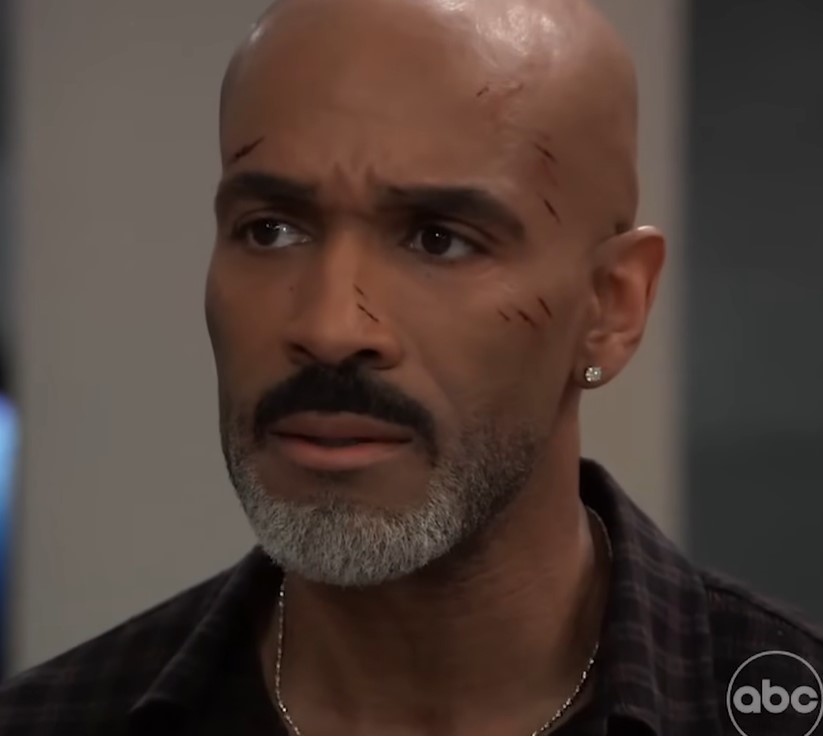
The more Curtis examined the timeline, the more one detail stood out: the gap. There was a window of time—small, but critical—where another driver had to have been nearby. Jordan didn’t just lose control out of nowhere. Something forced that reaction. Someone was on that road, close enough to trigger the swerve. And yet, no one came forward. No one called for help. No one returned. That wasn’t an accident. That was a decision.
When Curtis finally brought this to Dante Falconeri, he didn’t present it as a theory. He presented it as a realization. This wasn’t about finding a random driver anymore. It was about identifying someone who saw enough to understand what happened—and chose to walk away anyway. That distinction changed everything. Because it meant the person they were looking for wasn’t just a witness. They were part of the outcome.
Dante initially pushed back. The case file pointed in a different direction, and without physical contact between vehicles, the idea of a hit-and-run felt thin. But Curtis wasn’t chasing evidence alone—he was following behavior. A driver who panics might speed off. But a driver who never looks back? Who never reports anything? Who disappears completely from the scene? That’s not panic. That’s intent. And intent leaves a different kind of trail.
Then came the moment that changed the entire conversation. Curtis revealed the one name that fit every inconsistency, every gap, every unanswered question: Brook Lynn Quartermaine. Not because she caused the crash—but because she was there. She had already admitted to being on that road, at that exact time. She had described swerving, scraping the guardrail, narrowly avoiding something. She was the closest known driver to the scene.
Dante’s reaction said it all. Shock wasn’t even the right word. Brook Lynn wasn’t supposed to be part of this. She wasn’t on any suspect list. She didn’t fit the profile of someone who would abandon injured people in a wreck. But that’s what made it worse. This wasn’t a calculated criminal hiding in the shadows. This was someone familiar. Someone who made a split-second choice—and never corrected it.
Curtis didn’t accuse her of causing the accident. He didn’t need to. His focus was sharper than that. He pointed out what didn’t match. If Brook Lynn was that close, how did she not hear anything? How did she not realize the severity of what had just happened? And even if she didn’t know in that exact moment—why didn’t she come forward later? Why hide the damage to her car? Why stay silent?
That silence became the real clue. Not the crash. Not the injuries. But what happened after. Curtis laid it out in the simplest, most devastating way possible: she didn’t hit them… but she was there. And she made a choice to leave. In that moment, the case shifted from accident to accountability. Because sometimes, the worst damage isn’t caused by impact—it’s caused by absence.
For Dante, this wasn’t just a new lead. It was a complete reversal. Everything the investigation had been building toward suddenly felt off. If Curtis was right, then the department had been chasing the wrong narrative from the start. They weren’t looking for a reckless driver who caused a crash. They were looking for someone who could have made a difference—and didn’t.
And that’s what makes this revelation so dangerous. Because if Brook Lynn is truly the one Curtis believes she is in this story, then the fallout won’t just be legal. It will be personal. Relationships will fracture. Loyalties will be tested. And the line between innocence and guilt will blur in a way no one is ready for.
In the end, Curtis didn’t just uncover a clue. He exposed a truth no one wanted to face. This was never about who caused the crash. It was about who walked away—and why they never came back.
