What if Michael didn’t decide to fight back on his own? What if the moment everyone saw as a breaking point was actually a carefully triggered shift? The confrontation that exploded between Willow and Jacinda wasn’t just another emotional clash—it carried a different kind of energy. Something about it felt too precise, too perfectly timed. And when you look closer, one possibility becomes impossible to ignore: Jacinda didn’t just endure Willow’s attack… she may have pushed Michael toward his next move.
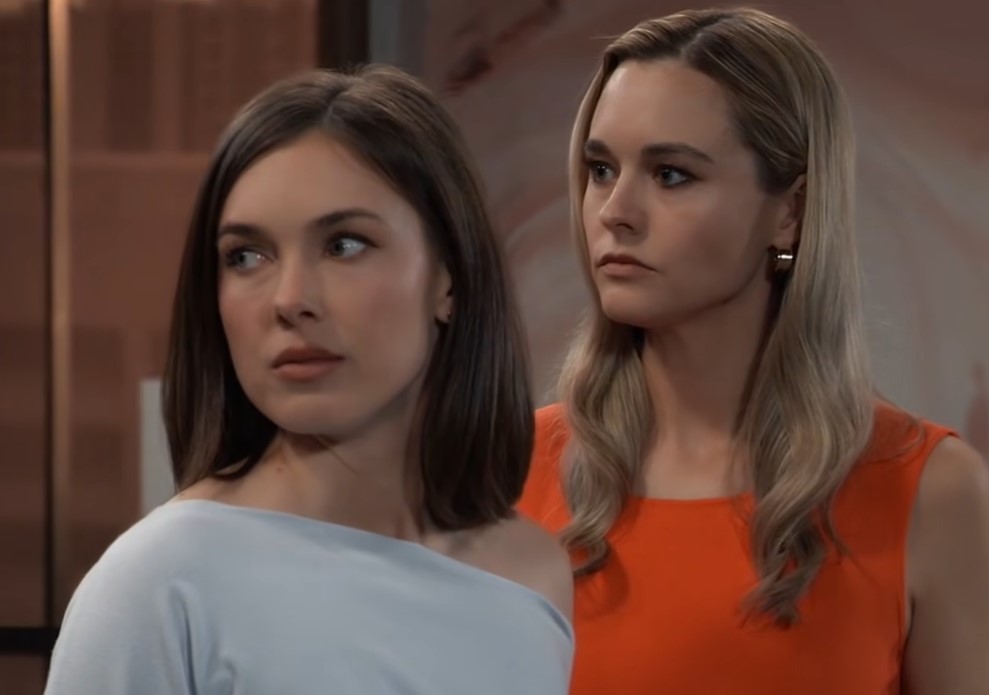
The confrontation itself is where everything begins to unravel. Willow, already spiraling, lashed out with threats and raw emotion, clearly believing she still had control over the narrative. But Jacinda didn’t respond like someone caught off guard. She stayed composed, almost calculated, choosing her words in a way that didn’t shut Willow down—but instead let her keep talking. That detail matters. Because in that moment, it didn’t feel like Jacinda was defending herself. It felt like she was creating space for Willow to expose herself.
And that’s where the dynamic shifts. Jacinda’s response wasn’t about winning the argument—it was about guiding it. She didn’t deny, didn’t retreat, didn’t escalate recklessly. Instead, she nudged the situation forward, almost as if she knew exactly how far Willow would go if given the chance. This is what turns the scene from emotional chaos into something far more strategic. Jacinda didn’t just react. She directed the outcome.
For Michael, this moment changes everything. Until now, he’s been stuck in a reactive position—questioning, doubting, lacking something concrete to act on. But hearing Willow cross that line, watching her lose control in real time, gives him something new: clarity. Whether it’s the tone of her threats or the implications behind her words, this is the first time Michael isn’t guessing anymore. And if there’s even a possibility that he captured that moment—through memory, timing, or even recording—then Jacinda didn’t just help him emotionally. She handed him a path forward.
That raises the biggest question of all: why was Jacinda so ready? Her calm, her confidence, the way she handled Willow—it doesn’t feel like instinct. It feels informed. There’s a growing sense that Jacinda knows more than she’s letting on, whether it’s about Drew, about Willow’s past actions, or even about evidence that hasn’t surfaced yet. The way she speaks suggests awareness, not assumption. And if she does know something, then her presence in that confrontation wasn’t accidental—it was necessary.
Meanwhile, Willow’s biggest mistake wasn’t losing her temper. It was choosing the wrong person to unleash it on. She believed she was asserting dominance, reinforcing control, but instead she handed over something far more dangerous: a glimpse of the truth. In trying to intimidate Jacinda, she revealed just how unstable her position really is. And worse, she did it in front of the one person who now has every reason to act against her.
What started as a personal conflict is now on the edge of becoming something much bigger. This isn’t just about betrayal or jealousy anymore—it’s about leverage. If Michael moves forward with what he now knows, this could easily escalate into a full custody battle, where every word, every threat, every slip becomes evidence. And in that scenario, Jacinda isn’t just a bystander or a romantic interest. She becomes a key witness, a catalyst, and possibly the deciding factor in how this war plays out.
And that brings us to the most unsettling possibility. What if none of this was random? What if Jacinda didn’t just happen to be there at the right time—but made sure she was? The timing, the composure, the outcome—it all aligns too cleanly to ignore. Maybe she didn’t just walk into that confrontation. Maybe she created the conditions for it. Because in the end, Michael didn’t just find his breaking point in that moment. He found his direction. And if Jacinda is the one who gave it to him, then this wasn’t just the moment everything exploded. It was the moment everything changed.
