Willow thinks she’s in control—but that illusion may be the biggest mistake she’s made yet. After vowing to “find another way” to deal with Michael and Jacinda, the narrative seems obvious on the surface: she’s about to escalate. But what if the real story isn’t about Willow’s next move at all? What if it’s about the trap she’s walking straight into? Because this time, Michael isn’t reacting. He’s waiting.

There’s a clear pattern in Willow’s recent behavior, and it’s not random—it’s strategic, but dangerously repetitive. She shot Drew and hid it. She kept him alive but silenced with drugs. She manipulated Nina into becoming an unwilling accomplice by planting her fingerprints on the syringe. She confronted Jacinda with threats and emotional volatility. And now, she’s abandoning the legal route entirely. Every move follows the same logic: control the narrative, eliminate risk, and stay one step ahead. The problem is, that strategy only works when no one sees it coming.
But Michael does see it coming—and that changes everything. He already admitted he needs to “play the long game,” and that line may be the most important hidden clue in this entire storyline. He’s not trying to win arguments. He’s not trying to expose Willow immediately. He’s doing something far more dangerous—he’s letting her believe she’s winning. Because the longer she escalates, the more mistakes she makes. And the more mistakes she makes, the stronger his case becomes.
What makes this shift so compelling is that Willow is no longer thinking like someone trying to protect herself—she’s thinking like someone trying to dominate the situation. Her next move could involve framing Jacinda, creating a scandal, or using her status as Congresswoman Cain to influence perception and legal outcomes. She might attempt to discredit Michael as a parent or manipulate circumstances to regain control of the custody narrative. From her perspective, she’s still playing offense. But from Michael’s perspective, she’s building the very case that will take her down.
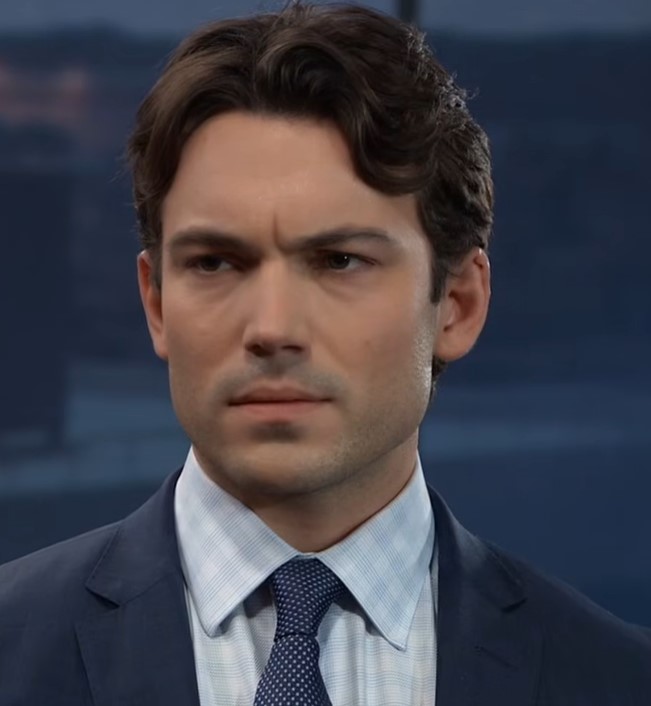
The real twist lies in what Michael may already have—or be quietly collecting. If he’s recording her threats, documenting her instability, or even uncovering the truth about Drew, then every move Willow makes isn’t just risky—it’s evidence. And the most telling detail? He doesn’t react when she lashes out. He doesn’t fight back in the moment. That restraint isn’t weakness. It’s strategy. He needs her to keep talking, keep pushing, keep crossing lines she can’t uncross.
This transforms the custody battle into something far more calculated than a simple fight over the kids. Willow believes she’s protecting Wiley and Amelia by removing Jacinda from their lives. But Michael may be turning the entire situation into a legal trap. Nina already warned that if Willow’s secrets come out—Drew, the drugs, the pressure from Sidwell—it’s over for her in court. The difference now is that it may not be a matter of “if” those secrets are revealed, but when Michael decides to reveal them.
And that’s where the May Sweeps energy truly ignites. The payoff isn’t Willow executing a perfect plan—it’s her plan collapsing in real time. Imagine the moment: Willow walks into court believing she has the upper hand. She’s ready to argue, to accuse, to control the narrative. And then Michael drops everything at once—recordings, evidence, witnesses. The room shifts. The power dynamic flips. And for the first time, Willow isn’t controlling the story—she’s trapped inside it.
This isn’t just a battle between two exes anymore. It’s a clash between perceived control and actual strategy. Willow is playing aggressively, but predictably. Michael is playing patiently, but decisively. And in that contrast lies the outcome. Because in a game built on manipulation, the person who wins isn’t the one who moves first—it’s the one who knows when to end it.
Willow thought she was playing the game. But Michael? He’s been writing the ending all along.
