This story sounds like a shocking celebrity scandal at first glance: a two-year secret relationship, emotional betrayal, and thousands of dollars exchanged. But the truth behind it is far more disturbing. What looked like a hidden love affair involving Steve Burton wasn’t a romance at all — it was an AI-powered scam so convincing that it blurred the line between reality and illusion in a way that feels genuinely unsettling.
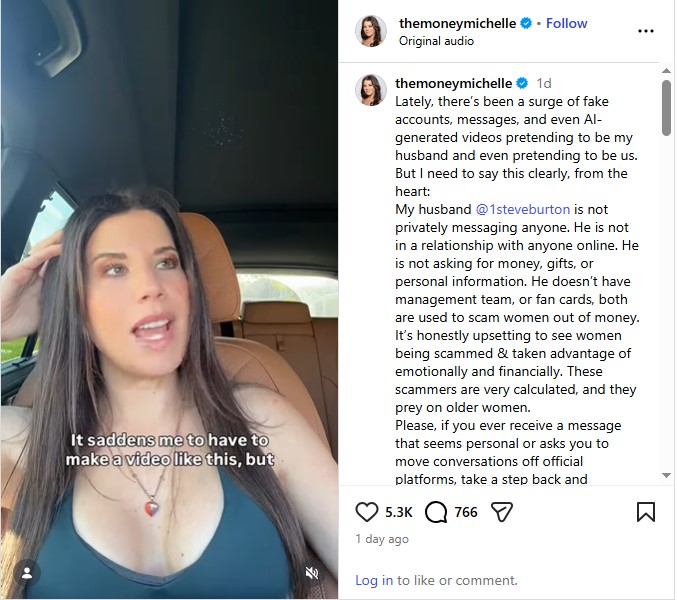
At the center of this story is a woman who believed she had been in a real, ongoing relationship with Steve Burton for nearly two years. This wasn’t a brief interaction or a passing fantasy — it was a sustained emotional connection that felt authentic to her. Over time, she trusted, opened up, and ultimately sent around $40,000 to the person she believed was Burton. To her, this wasn’t a scam. It was love.
The most shocking twist is how deeply the illusion took hold. The victim didn’t just believe in the relationship — she reportedly believed that Burton’s real-life wife was not actually legitimate. That level of conviction shows how far this deception went. This wasn’t just about money changing hands; it was about rewriting someone’s sense of reality. The emotional investment was real, even if the person behind it wasn’t.
What makes this case especially alarming is how advanced these scams have become. This wasn’t a simple fake account sending random messages. Scammers are now using AI-generated videos, manipulated images, and fabricated “news-style” content to create a fully believable narrative. The person on the other side didn’t feel like a stranger — they felt like someone real, someone familiar, someone trustworthy. That’s what makes this kind of deception so dangerous.
Michele Lundstrom, Steve Burton’s wife, stepped forward to publicly address the situation and warn fans. She made it clear that Burton does not privately message fans or ask for money under any circumstances. But even her attempt to clarify the truth revealed another chilling layer: some viewers questioned whether her own video warning was AI-generated. In a world where fake content looks increasingly real, even the truth now has to fight to be believed.
The reaction from fans has been intense and emotional. Many described the situation as more than just fraud — calling it a form of manipulation or even psychological abuse. Some fans shared that they receive multiple fake messages daily from accounts pretending to be celebrities. This is no longer an isolated incident; it’s a widespread issue growing quietly in the background of online fandom spaces.
What’s truly unsettling is the psychological dimension behind scams like this. These aren’t quick tricks designed to steal money and disappear. They are carefully constructed emotional experiences, built over time to feel genuine. The scammer doesn’t just play a role — they create a connection. They listen, respond, build trust, and slowly establish a version of reality that feels safe and believable. By the time the truth surfaces, the damage is already done.
This is why the story hits harder than a typical scam headline. The victim didn’t just lose money — she lost a relationship she believed in, a connection she thought was real. That kind of loss isn’t easily dismissed. It raises uncomfortable questions about how vulnerable people can be when technology is used to imitate intimacy so convincingly.
And perhaps the most unsettling question of all is this: if someone could believe in a fake relationship for two full years, how many others are still caught in something similar right now? How many conversations, messages, and “connections” online aren’t what they seem? This story may feel extreme, but it may also be just the beginning of something much larger.
Because this wasn’t just a lie. It was something designed to feel real — and that’s exactly what makes it so dangerous.
