question emerging from the latest developments in Genoa City. What looks like another personal feud is starting to feel something much colder, much more calculated. Because this time, the battlefield isn’t emotional, romantic, or even corporate. It’s legal. And once the law gets involved, there’s no clean way out.
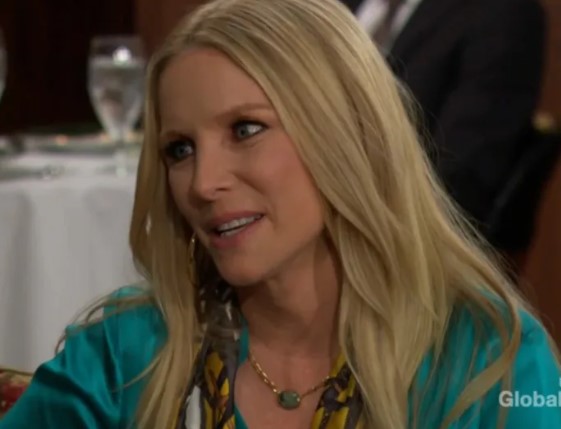
On the surface, the setup seems simple enough. Victoria approaches Christine with a powerful offer: return as District Attorney, and she’ll be handed information that could take Phyllis down for good. At the same time, Michael warns that Victor is working a “master plan,” something layered, something strategic. Meanwhile, Victor continues making moves elsewhere, quietly funding chaos and setting pieces in motion. None of these actions exist in isolation. Together, they form a pattern that’s too precise to ignore.
The real clue isn’t what was said—it’s what was chosen. Why Christine? Why now? Out of everyone in Genoa City, she’s the one with the exact legal authority and personal history needed to make this hit land hard. That’s not coincidence. That’s targeting. Victor didn’t just pick a player—he positioned a weapon exactly where it would do the most damage. And the moment you see it that way, everything shifts.
Fans are already connecting the dots, and their conclusion is chillingly consistent. Victoria may be the one making the offer, but this feels like Victor’s playbook from start to finish. The timing, the pressure, the promise of evidence—it all lines up with how Victor operates when he wants control without direct exposure. He doesn’t need to pull the trigger if he can guide someone else’s hand.
That’s where the real twist begins. This isn’t about revenge in the traditional sense. Victor isn’t just trying to hurt Phyllis—he’s trying to legitimize her downfall. By moving the fight into the legal system, he transforms a personal vendetta into something that looks like justice. If Christine steps into the DA role and builds a case, then Phyllis doesn’t just lose—she’s officially condemned. This isn’t chaos. This is prosecution.
But Christine’s position is far from simple. She stands at the center of a moral crossroads. On one side, she could follow the evidence presented to her and become the force that finally brings Phyllis down. On the other, she could start asking the wrong questions—the dangerous ones—and realize that she’s been placed into a role she didn’t choose. Because if the information she’s given is manipulated, then she’s not delivering justice. She’s delivering Victor’s agenda.
This is where the possibilities explode. One path leads to Phyllis facing legal consequences she may not be able to escape this time. Another flips the entire board—Christine uncovers the truth behind the setup and turns her power back on the man who orchestrated it. And then there’s the most dangerous possibility of all: this isn’t even the endgame. It’s just the first move in something much bigger, something that hasn’t revealed its full shape yet.
What makes this storyline hit harder is how sharply it aligns with audience reaction. Viewers aren’t just watching a rematch between two women with history. They’re recognizing a pattern. They’re seeing Victor’s influence spreading into places it shouldn’t reach. And more importantly, they’re questioning whether anyone in this situation is actually acting freely. Because when power operates this quietly, even the people holding it may not realize they’re being used.
In the end, this isn’t about Phyllis versus Christine. It’s about a system being manipulated from the inside. Victor didn’t need another fight. He needed control. And control doesn’t come from winning arguments—it comes from deciding the rules before the game even begins. If this theory holds, then Phyllis was never walking into a confrontation. She was walking into a structure designed to collapse on her.
Victor didn’t just set a trap. He built an entire framework around it. And if that’s true, then the most dangerous part isn’t what happens next—it’s how long this has already been in motion.
