What looked like one of the most emotional and intimate scenes in General Hospital may actually be one of the most dangerous turning points the show has quietly set up. Rocco finally breaking down and confessing to Britt that he shot Cullum felt like a release — a moment of truth, trust, and connection. But the real question isn’t whether he should have told her. The real question is far more chilling: what if someone else heard him too?
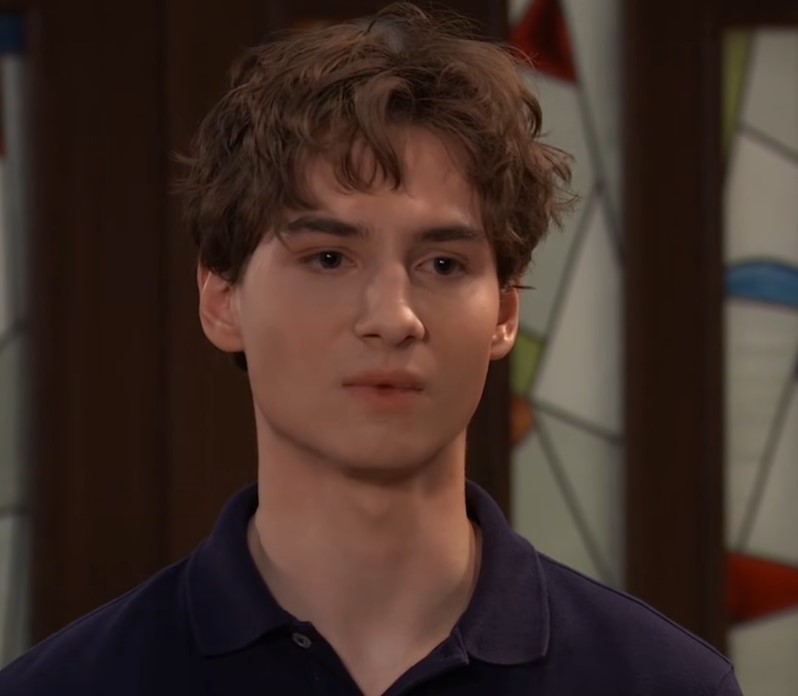
The setting alone raises immediate red flags. The hospital chapel is not a secure or private location — it’s a public, open space where anyone can walk in, sit quietly, and go unnoticed. There are no guards, no locked doors, and no indication that Britt or Rocco checked their surroundings before diving into such a sensitive conversation. In soap storytelling, locations are never accidental. Choosing a chapel instead of a closed room feels deliberate, almost like an invitation for something — or someone — to slip into the background unnoticed.
Rocco’s confession itself only heightens the risk. He wasn’t whispering vague hints; he was emotionally unraveling, recounting every detail — from following Britt to Pier 55, to watching the confrontation, to pulling the trigger himself. This wasn’t a fragmented admission; it was a full reconstruction of the night Cullum was shot. If anyone was nearby, they didn’t just overhear a secret — they gained a complete, usable truth. That kind of information isn’t just dangerous. It’s power.
That leads directly into the most unsettling theory: someone was already in the chapel before they arrived. Not someone who walked in halfway through, but someone who had been sitting there, unseen, as the entire confession unfolded. The framing of the scene — emotional, focused tightly on Britt and Rocco, with no environmental awareness — almost invites the idea that the camera didn’t show everything. In a show that thrives on hidden witnesses and delayed reveals, this kind of setup is rarely a coincidence.
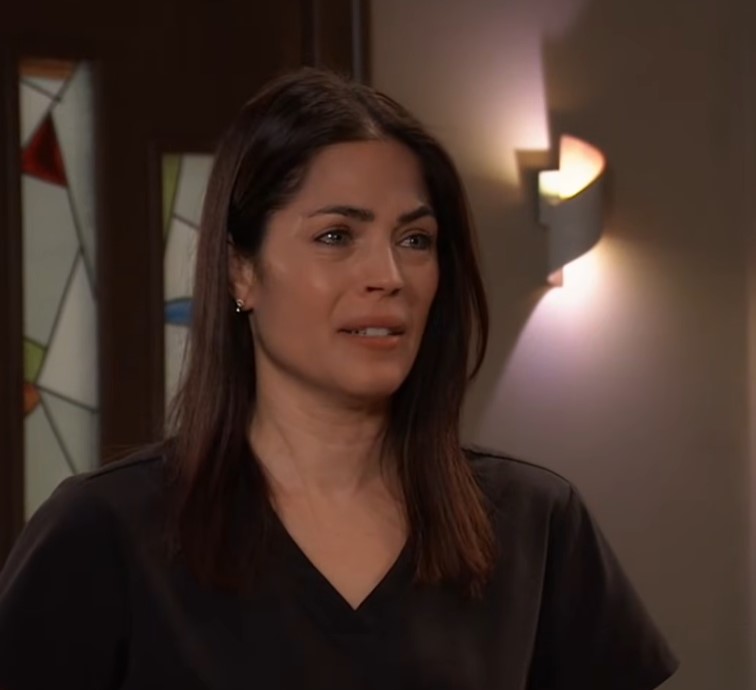
If that hidden listener exists, the most terrifying possibility is Cullum himself. The idea that he could have followed, watched, and silently confirmed the truth changes everything. Britt’s warning that he would kill them if he found out suddenly stops feeling like fear and starts feeling like foreshadowing. If Cullum now knows Rocco pulled the trigger, both Britt and Rocco move from being survivors to targets. The danger doesn’t rise — it explodes.
Another equally compelling possibility is Cassius, also known as “Nathan.” His involvement in covering up the truth already places him in a morally gray position, and his silence has been suspicious from the start. If he overheard the confession, it would mean he now holds complete leverage over everyone involved — Rocco, Britt, and even Jason’s false confession. That kind of control doesn’t just protect secrets; it manipulates outcomes. Suddenly, Cassius wouldn’t just be a player in the story — he would be controlling it from the shadows.
There’s also the wildcard scenario: a completely unknown third party. This could be someone connected to Sidwell, a WSB observer, or even a civilian who stumbled into something far bigger than they understand. This option may seem less obvious, but it carries the most long-term potential. An unseen witness with no immediate allegiance could become the catalyst for an entirely new arc — one where the truth is weaponized at the worst possible moment.
Even a more personal twist shouldn’t be ruled out. If Lulu — or anyone close to Rocco — overheard the conversation without revealing themselves, the fallout would be deeply emotional rather than purely dangerous. Trust would fracture, alliances would shift, and the focus would move from external threat to internal betrayal. In soap storytelling, emotional consequences can be just as explosive as physical ones.
What makes this theory so powerful is how it transforms the meaning of the scene. Rocco’s confession felt like relief — like he was finally unburdening himself after carrying overwhelming guilt. But if someone else heard it, that moment of release becomes the exact moment everything slipped out of control. The truth didn’t just come out — it spread. And in this world, the more people who know, the more unstable the situation becomes.
This is where the writing starts to feel intentional rather than coincidental. The absence of confirmation that the chapel was empty, the choice of a semi-public setting, and the emotional intensity that distracted both characters all point toward a potential payoff. When a show plants a moment that feels this exposed, it usually means the consequences haven’t caught up yet — but they will.
If that’s the case, then Rocco didn’t just confess. He triggered a chain reaction. Someone out there may already know the truth — and may already be deciding how to use it. Britt may think she’s stepping into danger to protect him, especially with her move toward Spoon Island, but what if the real danger has already moved ahead of her?
In the end, the question isn’t whether Rocco did the right thing by telling Britt. Emotionally, he had no choice. The guilt was consuming him, and he needed someone he trusted. But strategically, that moment may have been a catastrophic mistake. Because in Port Charles, secrets don’t stay buried — and if someone else was in that chapel, this one might already be on its way to blowing everything apart.
