The silence is about to shatter, and when it does, nothing in Port Charles will stay the same. For weeks, Kai and Trina have carried a truth that never should have stayed buried: Willow is the one who shot Drew. They didn’t have the perfect evidence, they didn’t witness the act directly, but piece by piece, clue by clue, the reality became impossible to ignore. And now, as the danger around them escalates, the question is no longer whether they should speak—it’s whether they can survive if they don’t.
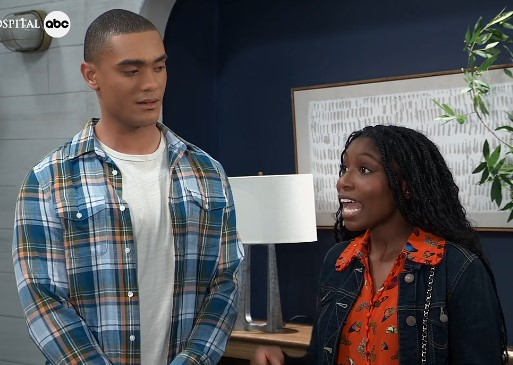
What pushes them over the edge isn’t morality. It’s fear. Willow is no longer predictable, no longer someone operating within limits. There’s a growing sense that she knows they know, and that realization changes everything. In soap logic, secrets don’t stay dormant—they explode, and often violently. Kai and Trina are no longer just bystanders to a hidden crime; they are liabilities. And when a character like Willow starts losing control, liabilities don’t stay safe for long. Speaking up becomes less about justice and more about survival.
But why go to Michael instead of the police? The answer lies in what they actually have—and what they don’t. There’s no smoking gun, no direct eyewitness account, no clean piece of evidence that would hold up in court. What they have is pattern recognition: the ringtone, the timing, the inconsistencies that don’t add up any other way. To law enforcement, that’s speculation. To Michael, it’s something else entirely. It’s a missing piece in a puzzle he’s already been trying to solve, especially as his life continues to unravel around Willow.
The moment of confession is where everything shifts. Kai and Trina don’t come in with certainty wrapped in a bow. They come in with hesitation, with fragments, with a truth that feels undeniable even if it can’t be proven. And that’s what makes it powerful. Because for Michael, it’s not about legal standards—it’s about instinct. It’s about that chilling realization that the person he’s been entangled with is far more dangerous than he allowed himself to believe. Suddenly, the past reconfigures itself, and the pieces start locking into place.
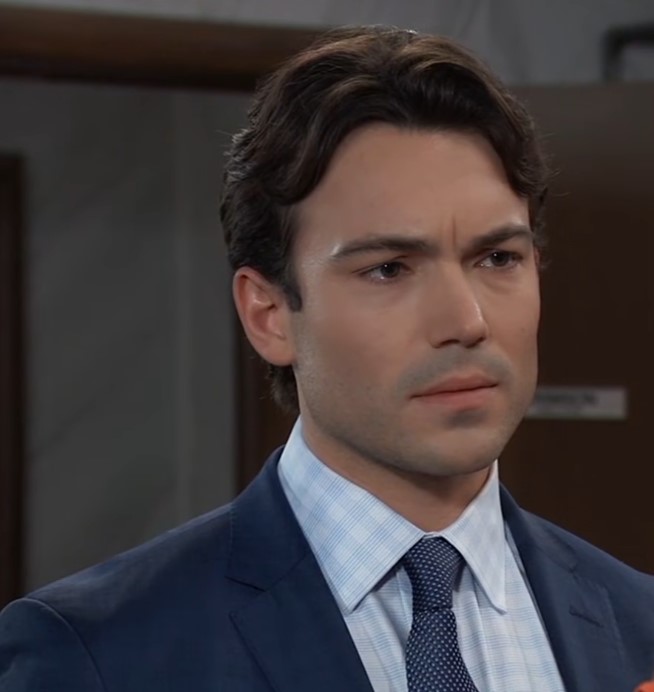
What Michael does next is what truly changes the game. He doesn’t run to the police. He doesn’t confront Willow in a dramatic explosion—at least not yet. Instead, he does something far more strategic. He holds onto the information. He uses it. In a custody battle where perception is everything, even the suggestion that Willow is unstable, violent, or hiding something this massive could tip the scales. This isn’t about proving she shot Drew—it’s about proving she’s not safe. And in that arena, Michael finally has power.
But this kind of truth never lands quietly. It provokes. It destabilizes. And most importantly, it threatens the person with the most to lose. Willow isn’t going to sit back and let her world collapse. If anything, this revelation is exactly what pushes her into her most dangerous phase yet. Whether it’s silencing Kai and Trina, manipulating the narrative, or striking before she can be exposed, the threat level skyrockets the moment Michael knows. The truth doesn’t end the story—it ignites the next war.
And then there’s the bigger question: why now? Why did it take this long for Kai and Trina to come forward? It’s easy to call it hesitation or fear, but there’s something deeper at play. The timing feels deliberate, almost as if the story itself has been waiting for the exact moment when this truth would cause the maximum damage. The missing cameras, the lack of physical evidence, the reliance on something as subtle as a ringtone—all of it suggests that this was never meant to be a simple reveal. It was meant to be a trigger.
Because this confession isn’t the endgame. It’s the turning point. Kai and Trina may finally say the words out loud, but they won’t control what happens next. Michael may gain leverage, but leverage comes with risk. And Willow, now backed into a corner, becomes more unpredictable than ever. In a storyline built on secrets, misdirection, and hidden clues, the truth isn’t a resolution—it’s a weapon.
And now that weapon is in Michael’s hands. The only question left is how far he’s willing to go to use it… before Willow makes her move first.
