Nick Newman has always presented himself as the moral compass of Genoa City, the Newman who supposedly knows where the line is and refuses to cross it. Lately, he has been especially vocal about condemning others for playing dirty, painting himself as a victim of betrayal, manipulation, and corporate warfare. But the louder Nick preaches about right and wrong, the clearer it becomes that his outrage is selective — and dangerously hollow.
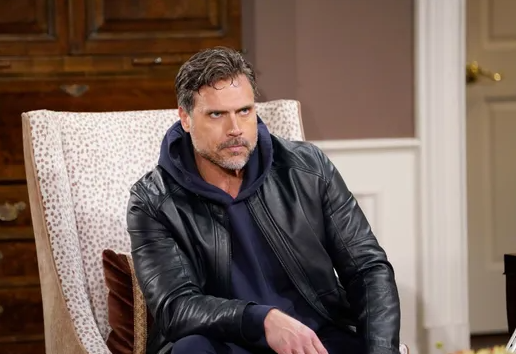
At the center of Nick’s fury are Phyllis Summers and Cane Ashby, whom he accuses of unethical power plays and ruthless ambition. In Nick’s version of events, he and Victoria Newman are being unfairly targeted, pushed aside, and forced to defend themselves against people who have no limits. He frames the conflict as a moral battle, with himself firmly on the side of decency and restraint. That framing, however, collapses under even minimal scrutiny.
While Nick criticizes others for crossing ethical boundaries, his own father is quietly preparing to obliterate those boundaries entirely. Victor Newman is plotting to use Lily Winters and her children as leverage against Cane — a move that turns innocent family members into bargaining chips. This is not a metaphorical pressure tactic or a harsh business maneuver. It is a plan rooted in coercion, fear, and the threat of harm, aimed at forcing Cane to surrender control.
What makes this situation impossible to ignore is Nick’s silence. He is aware of Victor’s intentions. He understands exactly what is at stake. And yet, the man who lectures everyone else about morality offers no meaningful resistance. Nick does not draw a line. He does not threaten to walk away. He does not publicly or privately condemn the idea of using children and a mother as tools in a corporate war. He simply looks the other way.
Victoria’s reaction only deepens the hypocrisy. Her anger is focused not on the cruelty of the plan, but on being excluded from it. She resents Victor for shutting her out, not for contemplating an act that weaponizes a family. The outrage, once again, is about power and position rather than ethics. When the plan itself is treated as acceptable, the moral high ground the Newmans claim begins to look like a carefully staged illusion.
The contradiction becomes even more disturbing when viewed alongside ongoing events in Genoa City. A separate and very real kidnapping storyline is unfolding at the same time, underscoring the trauma and devastation such acts cause. Against that backdrop, Victor’s willingness to threaten something similar for business gain feels even more grotesque. The show is drawing an unmistakable parallel, and Nick’s refusal to acknowledge it speaks volumes.
Adding another layer of irony is Sharon Newman’s position in all of this. Sharon has firsthand experience with the pain of having a child taken and used as leverage. She knows exactly what that kind of loss and fear does to a parent. Yet she stands aligned with Nick and Victoria, seemingly unmoved by Victor’s plan. Her silence reinforces the idea that, within the Newman orbit, morality bends when it becomes inconvenient.
Nick’s greatest failure here is not that he loves his father or struggles to confront him. It is that he continues to judge others with ferocity while granting his own family unlimited moral exemptions. He condemns manipulation, yet tolerates coercion. He decries cruelty, yet ignores it when it serves Newman interests. This is not moral complexity — it is hypocrisy dressed up as principle.
In the end, Nick Newman’s outrage rings false because it is conditional. His ethics apply to enemies, not to blood. His sense of justice collapses the moment Victor decides the ends justify the means. By staying silent, Nick becomes complicit, no matter how often he claims otherwise. And the more he insists on calling himself the “good” Newman, the clearer it becomes that his moral high ground was never real to begin with.
