Justine Turner didn’t lose control of the case against Michael by accident — she gave it away. In the February 3, 2026 episode of General Hospital, one quiet procedural decision exposed a massive legal weakness, and Diane Miller saw it instantly. This wasn’t about evidence, motives, or even guilt. It was about optics, ethics, and one irreversible mistake that may collapse the entire prosecution before it ever reaches a courtroom.

The blunder began the moment Justine allowed Molly Lansing-Davis to participate in Michael’s questioning. Molly isn’t just another assistant DA or observer. She is Michael’s cousin. That single fact transforms the interview from a routine investigative step into a procedural minefield. Any competent defense attorney would immediately flag the conflict of interest, and Diane didn’t hesitate for a second. In one move, Justine undermined the credibility of her own office and tainted everything that followed.
From a legal standpoint, conflict of interest is poison. It doesn’t matter how professional Molly intended to be or how carefully she phrased her questions. The appearance of bias alone is enough to challenge the integrity of the interrogation. Diane understands this better than anyone. She knows courts don’t just weigh facts — they scrutinize fairness. And Justine handed her the argument that Michael was questioned under compromised conditions.
What makes this mistake so damaging is that it cannot be undone. The interrogation already happened. The timeline was discussed. Michael’s presence, demeanor, and responses are now part of the record. Diane can move to suppress the entire interview, arguing that Michael’s constitutional rights were jeopardized by familial proximity and prosecutorial negligence. Even worse for Justine, any attempt to use that interview later could backfire spectacularly in front of a judge or jury.
Diane’s reaction tells us everything. She didn’t panic. She didn’t warn Michael to stop talking. She smiled. That smile wasn’t confidence — it was calculation. Diane immediately recognized that Justine’s error shifts leverage entirely. The DA’s office can no longer proceed aggressively without risking embarrassment, dismissal, or an ethics complaint. Every step forward now carries the risk of exposure.
This is where Diane’s long game comes into focus. She won’t rush to court tomorrow demanding suppression. That would alert Justine too quickly. Instead, Diane will let the DA’s office stew in uncertainty. She knows they are juggling two explosive cases: Michael and Willow. Losing either one would be devastating, but losing both would be catastrophic. Justine’s misstep forces caution, delay, and second-guessing — exactly the environment Diane thrives in.
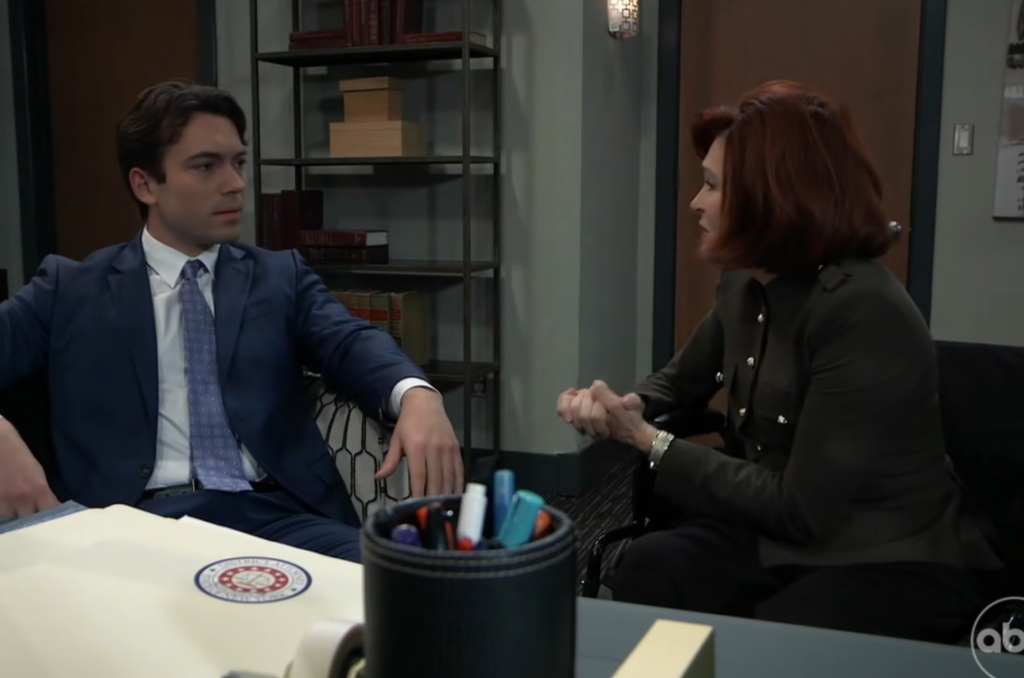
Meanwhile, Diane will quietly reposition Michael. She will keep him cooperative but guarded, emphasizing that he has already complied under flawed circumstances. If the DA hesitates, Diane can frame that hesitation as doubt. If they push forward, she can frame it as recklessness. Either way, Justine is boxed in. The power dynamic has flipped.
The ripple effect extends beyond the criminal investigation. Michael’s visitation hearing suddenly takes on new weight. Diane understands that family court decisions are influenced by perception. If Michael appears to be under serious criminal threat, it weakens him. But if the DA stalls or retreats, Diane can argue that the investigation lacks merit. Justine’s mistake doesn’t just endanger her case — it stabilizes Michael’s public image at a critical moment.
What makes this especially brutal is that Diane doesn’t even need to prove Michael’s innocence yet. She only needs to prove that the prosecution played sloppy. In the legal world, that’s often enough. Courts punish misconduct more harshly than they reward ambition. Justine didn’t just miscalculate — she violated a fundamental boundary, and Diane will make sure everyone remembers it.
This wasn’t a dramatic courtroom showdown or a shocking confession. It was quieter than that. One cousin. One room. One decision that should never have been made. And now, the entire case may unravel because Justine Turner forgot the most basic rule of prosecution: don’t give the defense a weapon.
Diane Miller didn’t fire the shot that day. But she may have just won the war.
