Britt Westbourne has spent years believing her body was betraying her, that a cruel genetic fate was slowly closing in, and that survival depended on a very specific medication. But what if that belief was carefully constructed? What if Britt was never truly battling Huntington’s disease — and what we are watching now is the moment the lie begins to crack?
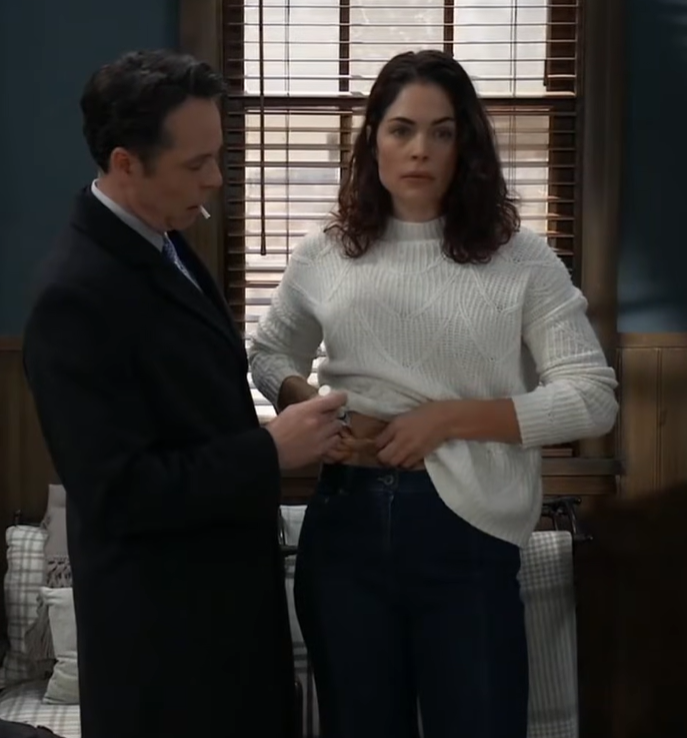
The key moment comes when Cullum doesn’t just withhold Britt’s medication — he insists on injecting her himself. That choice matters. Doctors don’t normally seize control of a patient’s meds unless there is something to hide. By taking full control of the needle, Cullum also takes control of the narrative: what Britt believes she needs to live.
Cullum claims his actions are about “safety” and “progress,” but the language he uses is chillingly transactional. One dose at a time. Only while working. Only under his supervision. This isn’t treatment — it’s conditioning. Britt is being trained to associate stability with obedience and collapse with resistance.
Now here’s where the theory sharpens. What if the substance Cullum injected wasn’t Britt’s actual medication at all? What if it was a temporary stabilizer designed to mimic short-term relief while accelerating dependency? That would explain why Britt can function briefly after injections but spirals so quickly when deprived. The “illness” appears aggressive, but only when control is removed.
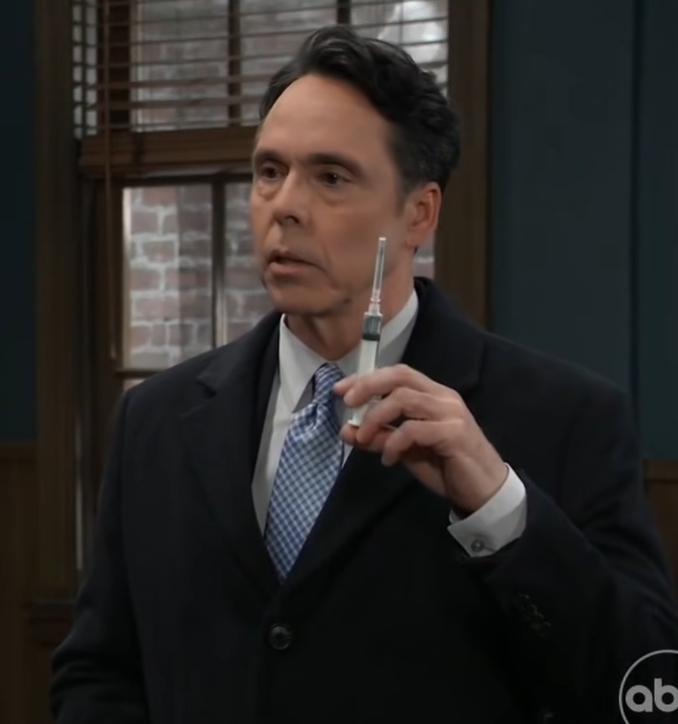
This leads directly to the most explosive possibility: Britt may not have Huntington’s disease in the first place. Huntington’s is genetic, progressive, and devastating — but GH has never fully shown the kind of neurological decline that should accompany it. Instead, Britt’s symptoms have always been conveniently manageable with medication, conveniently worsened under stress, and conveniently stabilized under external control.
That pattern doesn’t scream terminal illness. It screams pharmaceutical manipulation.
If Britt was misdiagnosed — or worse, deliberately led to believe she was sick — then the medication she’s relied on for years may not have been treating a disease at all. It may have been suppressing symptoms created by the drug itself. A closed loop. Take the drug, feel “better.” Lose access, collapse. Repeat. Depend.
Cullum’s behavior suddenly looks far more sinister through this lens. He doesn’t fear Britt dying. He fears Britt realizing she doesn’t need him. By relocating the meds to Wyndemere and controlling each dose, he ensures Britt never experiences her baseline state — the version of herself that might prove she was never terminally ill to begin with.
Jason’s involvement is the ticking bomb in this storyline. Jason promised to replicate Britt’s medication, and that promise now carries enormous weight. If Brick analyzes the compound and finds inconsistencies — additives, suppressants, or non-therapeutic agents — the entire medical history collapses. And so does Cullum.
That’s likely why Cullum acted fast. He returned with a needle before Jason could get proof. He injected Britt himself before anyone else could test the vial. This wasn’t kindness. It was damage control.
The emotional devastation Britt feels isn’t just fear of illness — it’s grief over stolen autonomy. She believes her body is broken. She believes her survival depends on men in power. And that belief is exactly what keeps her compliant, isolated, and easy to manipulate.
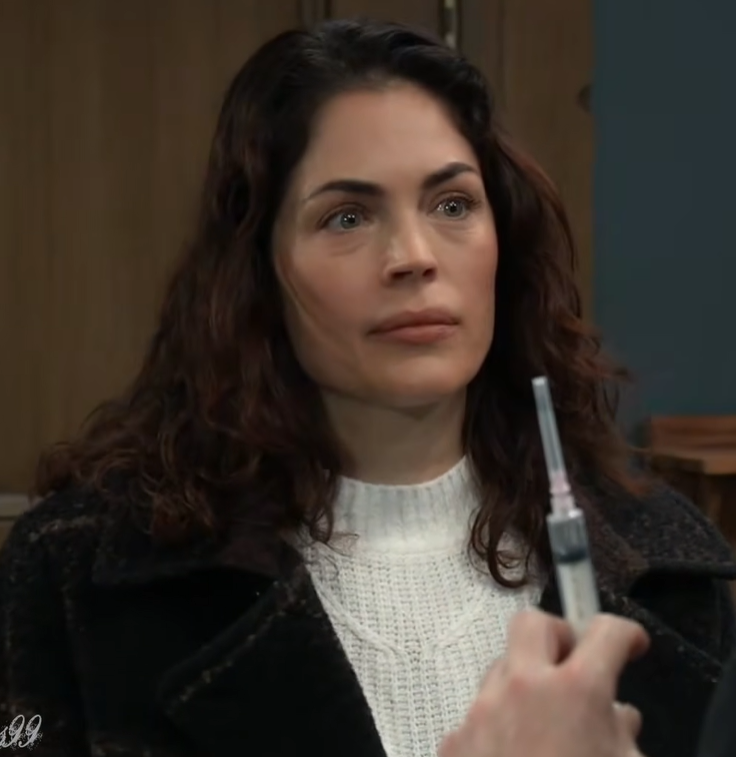
General Hospital has been circling a dangerous theme for months: control disguised as care. We saw it with Willow. We saw it with Anna. And now Britt may be the most disturbing example yet. Violence isn’t always physical. Sometimes it’s medical. Sometimes it comes with a syringe and a smile.
If Britt is proven not to have Huntington’s, the fallout will be massive. Cullum doesn’t just lose his authority — he becomes a villain who stole years of Britt’s life, her choices, and her sense of self. And Britt won’t just be fighting for her health anymore. She’ll be fighting for the truth.
Because the most terrifying possibility isn’t that Britt is dying.
It’s that she never was — and someone needed her to believe she was.
