What looked like a minor forensic detail has suddenly become the center of a major controversy. A streak of black paint on a guardrail, quickly identified as coming from a “black German-made car,” has pushed the investigation in a very specific direction. For Curtis, that direction led straight to Isaiah. But the real question is not why Curtis made that connection—it’s whether he made it too fast, and whether that single detail is actually leading everyone away from the truth instead of toward it.
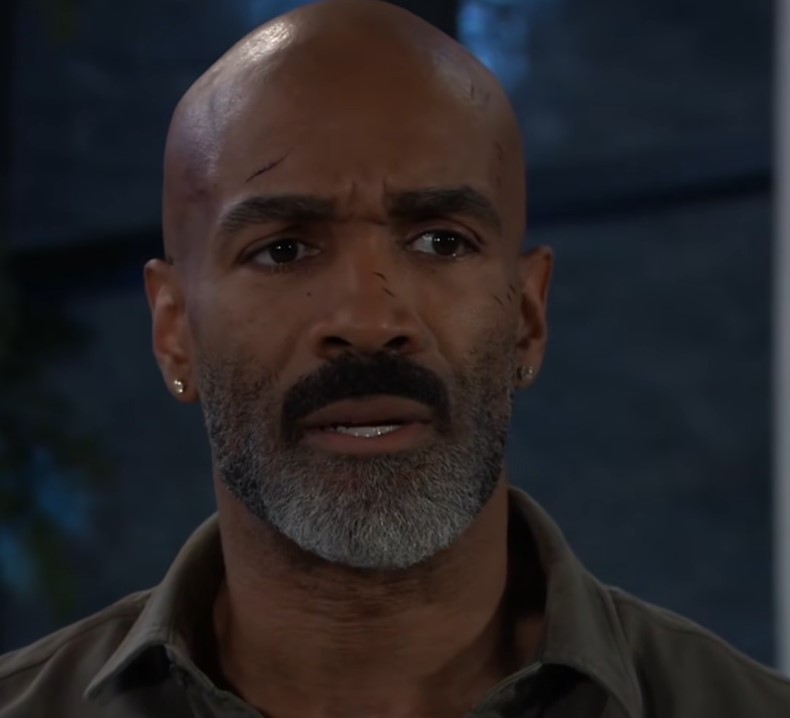
On paper, the clue sounds convincing. Black paint, German make—this narrows the field, right? Not exactly. “German-made car” could mean BMW, Mercedes, Audi, or even other less obvious brands. In a place like Port Charles, where luxury vehicles are hardly rare, this description doesn’t eliminate suspects—it barely even filters them. The clue feels specific, but in reality, it’s dangerously broad. And when a clue can point to multiple people at once, it risks becoming less of a lead and more of a narrative trap.
That’s where Curtis’s reaction becomes crucial. Instead of treating the evidence as one piece of a larger puzzle, he appears to lock onto Isaiah almost immediately. There’s no confirmed timeline, no eyewitness placing Isaiah at the scene, no surveillance backing it up. Just a general vehicle description—and a leap. This is where the line between deduction and assumption starts to blur. Because if Curtis already had reasons to distrust Isaiah, then this “clue” may not be guiding him—it may be confirming what he already wanted to believe.
And that raises a deeper issue: bias. Investigations are supposed to follow evidence, not emotion. But Curtis’s quick pivot toward Isaiah suggests something more personal at play. Whether it’s tension, rivalry, or unresolved conflict, it’s hard to ignore the possibility that Isaiah became the prime suspect not because the evidence demanded it, but because Curtis needed it to fit. In that sense, the paint on the guardrail didn’t reveal the truth—it revealed Curtis’s mindset.
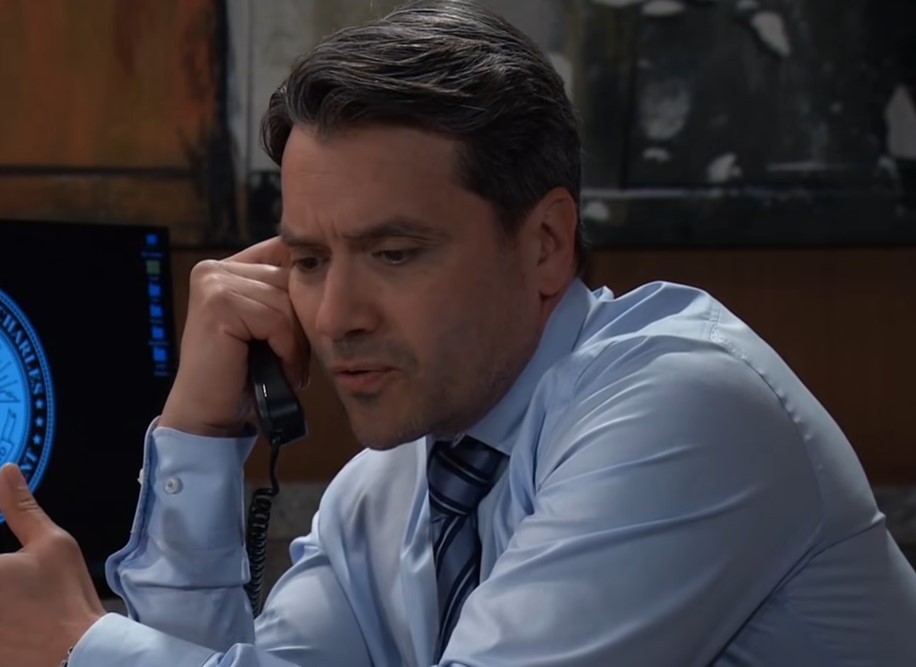
Even more troubling is the uncertainty surrounding the evidence itself. There’s no confirmed proof that the paint transfer even happened during the crash in question. Guardrails don’t reset overnight. That mark could have been there for days, weeks, even longer. Without a clear timeline, the entire foundation of this theory starts to crack. If the paint isn’t tied directly to the accident, then everything built on it collapses. And suddenly, what looked like a breakthrough becomes a massive misstep.
This opens the door to another possibility that fans are already circling: Isaiah as a red herring. In soap storytelling, the most obvious suspect is often the least likely to be guilty. By pushing Isaiah to the front so quickly, the narrative might be setting up a reversal. There are other potential drivers, other vehicles, other unexplored angles—but none of them are being pursued with the same intensity. That imbalance feels intentional, like the story wants viewers to look in one direction while something else unfolds in the background.
At the same time, it’s important to remember how these stories are built. Details like the paint clue are rarely random. Writers plant them with purpose. But purpose doesn’t always mean clarity—it can also mean misdirection. The “black German car” might still matter, but not in the way Curtis thinks. It could point to someone else entirely, someone who hasn’t even entered the suspect pool yet. Or worse, it could be a piece of evidence that only makes sense once the full timeline is revealed, flipping everything we thought we knew.
That’s why the biggest questions are still unanswered. Is Curtis wrong about Isaiah, or just early? Is the investigation already off track, chasing a theory built on unstable ground? And most importantly, who actually drove that car on the night of the crash? Because until those answers are clear, every conclusion feels premature—and potentially dangerous.
In the end, this storyline may not be about identifying the driver at all. It may be about exposing how quickly people assign blame when the pressure is high and the evidence is thin. One streak of paint, one assumption, one name—and suddenly an entire case takes shape. But if that shape is built on the wrong foundation, the fallout won’t just affect the investigation. It will expose how easily the truth can be buried under something that only looks like proof.
Sometimes the most obvious clue isn’t the one that solves the mystery. It’s the one that hides it.
