Tracy Quartermaine didn’t need Chase to agree with her, forgive her, or even understand her. What she needed — and what she achieved with surgical precision — was Chase’s silence. In one quiet confrontation, Tracy proved she wasn’t acting on impulse or emotion. She was executing a plan. And Chase, for all his authority and moral clarity, discovered he had already lost before he spoke a word.
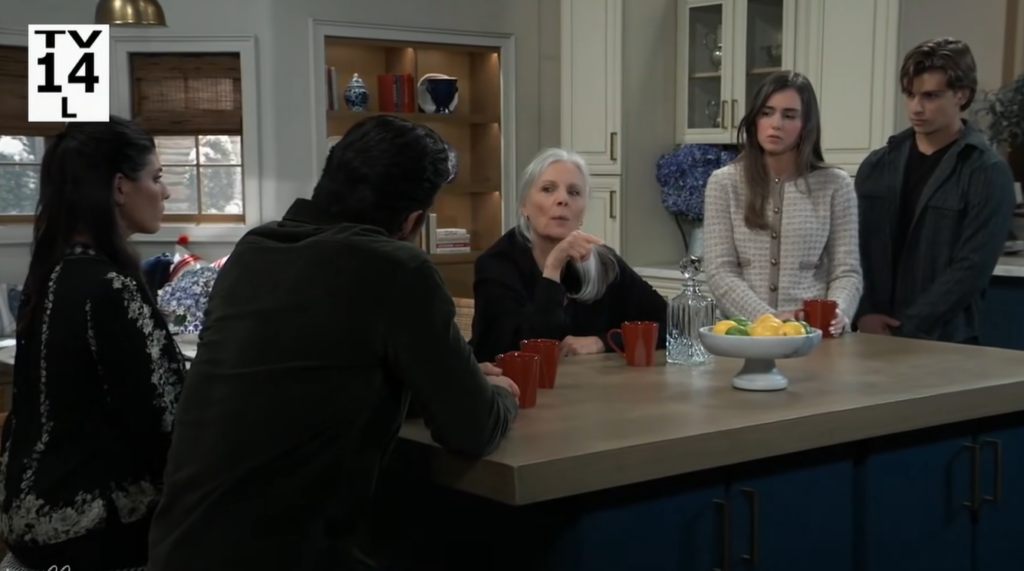
At first glance, Chase appears to hold the upper hand. He is the cop, the lawman, the man whose job is to draw lines and enforce consequences. Tracy, by contrast, looks like the rule-breaker — the wealthy matriarch who marched into Drew’s home and reclaimed what she believed was stolen. But that surface-level reading collapses the moment Tracy opens her mouth. She doesn’t argue morality. She doesn’t justify her anger. She simply states facts. A lawyer was present. No objection was made. The system saw everything — and allowed it.
That is the moment Tracy is elevated from defiant grandmother to master strategist. She doesn’t rage against the law. She studies it, anticipates it, and positions herself inside its blind spots. Tracy understands something Chase doesn’t want to admit: the law doesn’t reward righteousness. It rewards preparation. And she came prepared.
Chase’s warning to Tracy is measured, professional, and sincere. He tells her she crossed a line. He tells her that taking the law into her own hands is dangerous. But his words land without consequence, because Tracy has already neutralized them. There is no illegal entry to charge. No stolen property to recover. No procedural misstep to exploit. Chase isn’t ignored — he’s rendered irrelevant.
What makes this moment so devastating is that Chase isn’t wrong. He sees exactly what Tracy did. He understands the risk. He knows how easily this kind of behavior can spiral into something darker. But knowing the truth is not the same as being able to act on it. And this is where Chase becomes a new kind of tragic figure — not blind, not corrupt, not compromised, but immobilized.
Tracy never asks Chase for understanding because she doesn’t need it. She needs him boxed in. By ensuring a lawyer’s presence and staying within technical legality, she forces Chase into an impossible position. If he pushes harder, he looks like he’s defending Drew. If he backs off, he looks like he’s enabling Tracy. Either way, he loses credibility. The trap is elegant because it leaves no fingerprints.
This is why Tracy’s power feels more dangerous than brute force. She doesn’t threaten. She doesn’t bribe. She doesn’t intimidate. She lets the system do the work for her. In doing so, she exposes a brutal truth: authority without leverage is meaningless. Chase has the badge, but Tracy controls the board.
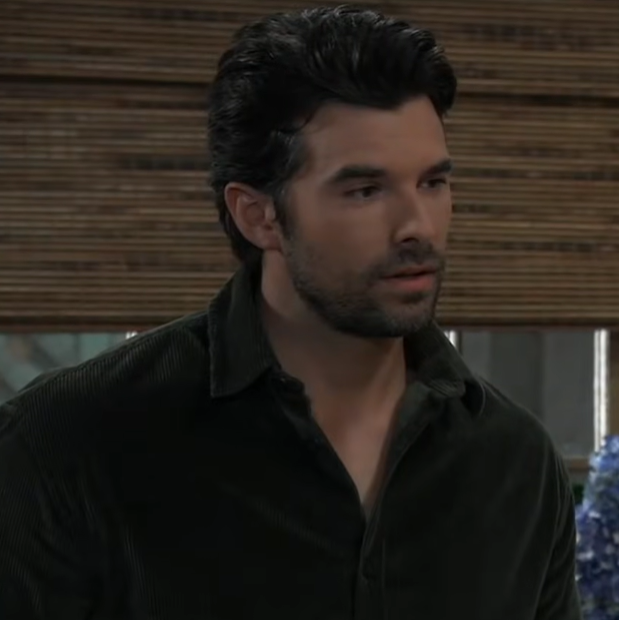
For Chase, the realization cuts deep. His role as a cop is built on the belief that seeing the truth is enough — that clarity leads to action. But in this moment, clarity becomes a curse. He knows Tracy crossed an ethical line. He knows the situation isn’t clean. And yet, every legitimate path forward is blocked. Acting makes him wrong. Standing still makes him complicit. There is no righteous move left.
That is what makes Chase’s arc so compelling here. This isn’t the tragedy of a man who fails to see evil. It’s the tragedy of a man who sees it perfectly and can’t touch it. The system he serves has rules, and Tracy has mastered them better than he has. Not because she’s smarter — but because she’s willing to think like the system, not above it.
Tracy’s victory isn’t loud. It doesn’t end with handcuffs or applause. It ends with Chase stepping back, knowing he has no legal ground left to stand on. She doesn’t defeat him in an argument. She removes his ability to argue at all. That is strategy in its purest form.
In the end, Tracy doesn’t walk away as a reckless troublemaker. She walks away as a tactician who understands that power isn’t about breaking rules — it’s about choosing which ones to use. Chase is left behind, holding the truth, burdened by it, and forced to accept that sometimes justice isn’t stopped by villains. Sometimes it’s stalled by procedure.
And that may be the cruelest twist of all.
